Scaling Up On-Device LLMs via Active-Weight Swapping Between DRAM and Flash
- Doc no.
- KKZ-TN-108
- Date
- 2025-09-01
- GMT day
- 2025:244
- Est. read
- 3 min
Intensive Reading
01Author Info#
- About Ting Cao - Dr. Ting Cao: A Professor at the Institute of AI Industry Research (AIR), Tsinghua University.
02Background#
03Challenges#
- 挑战一:如何准确地识别出下一步计算到底需要哪些“活跃权重” 。如果识别错误,会降低模型的准确度。
- 挑战二:如何能足够早地预测出需要的活跃权重,从而将缓慢的闪存加载过程与当前的计算过程并行处理,以隐藏延迟。
- 现有的一些方法依赖 ReLU 激活函数来预测稀疏性,但这不适用于 Llama 等为追求高精度而未使用 ReLU 的现代 LLM.
04Insights#
利用了 Top-K 的稀疏性,实现了在非 ReLu 上的权重值预测和预取
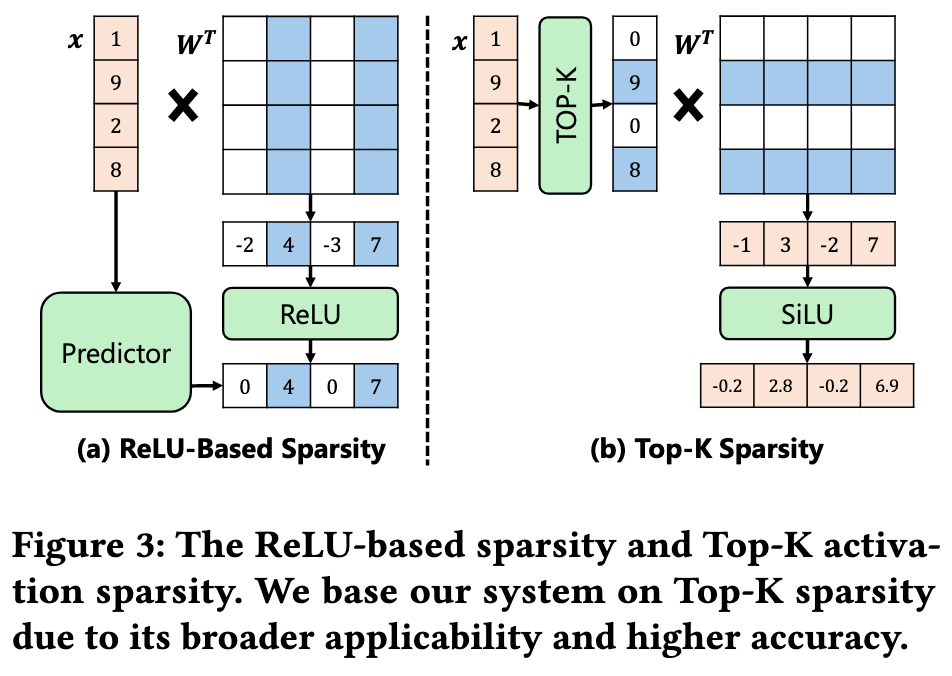
论文提出了两个核心观察:
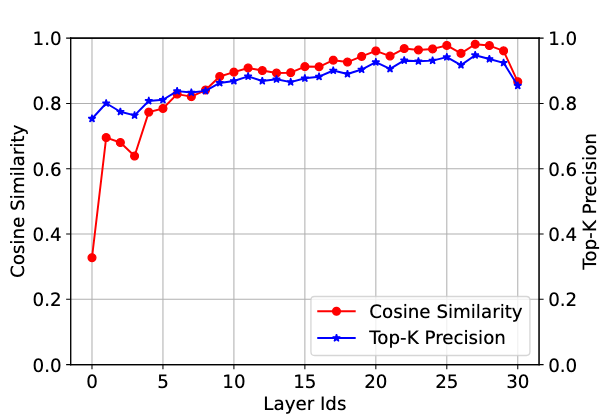
Similarities in Cross-Layer Activations
- The input activations of the attention and MLP blocks in LLMs exhibit high cross-layer similarity due to residuals to the input activations.
- 由于激活值相似度很高,所以用当前层最重要的 K 个激活通道去预测下一层最重要的 K 个激活通道,准确度也很高
Contextual Hot Active Weights During Decoding
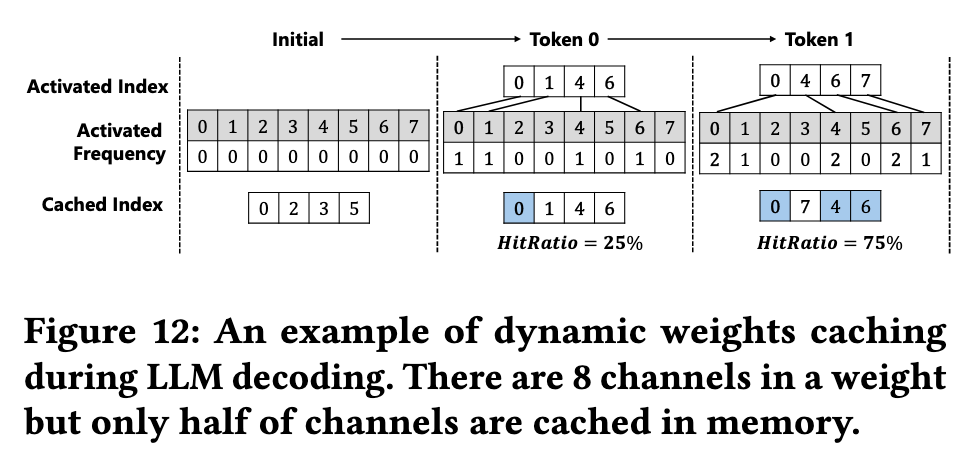
- Contextual active weights exhibit high temporal locality across inference iterations during decoding.
- 在一个具体的对话或任务中(上下文层面),“热点权重”的重复使用率,远高于在所有通用任务中(任务层面)的平均重复使用率
- 所以根据上下文的激活频率设计缓存会更有效(缓存命中率会更高)
05Approaches#
5.1Cross-Layer Active Weight Preloading#
当计算第 N 层时,ActiveFlow 利用第 N 层的激活值来预测并提前加载第 N+1 层到第 N+k 层(一个“层组”)所需要的活跃权重
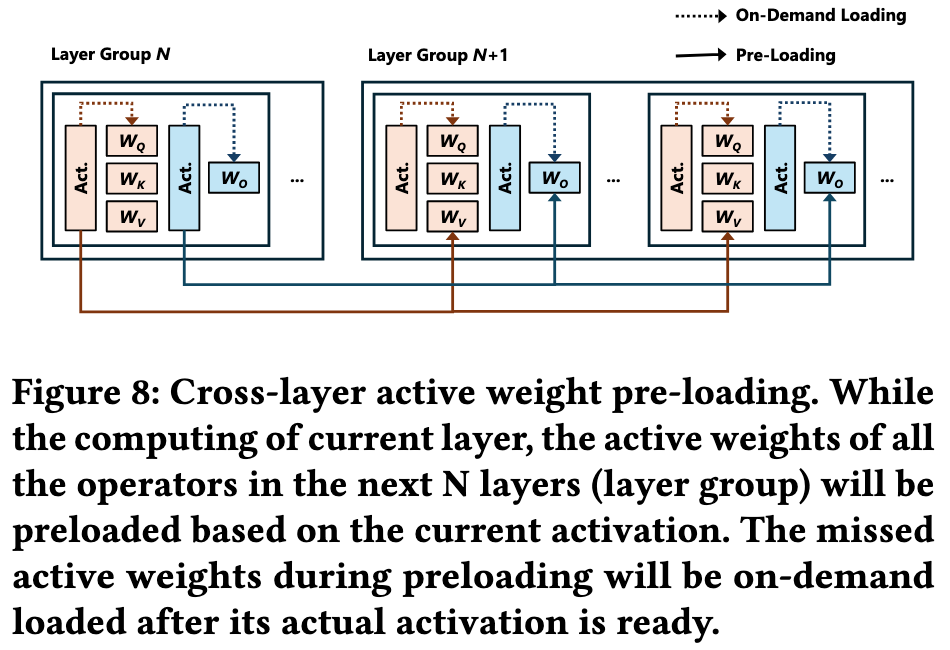
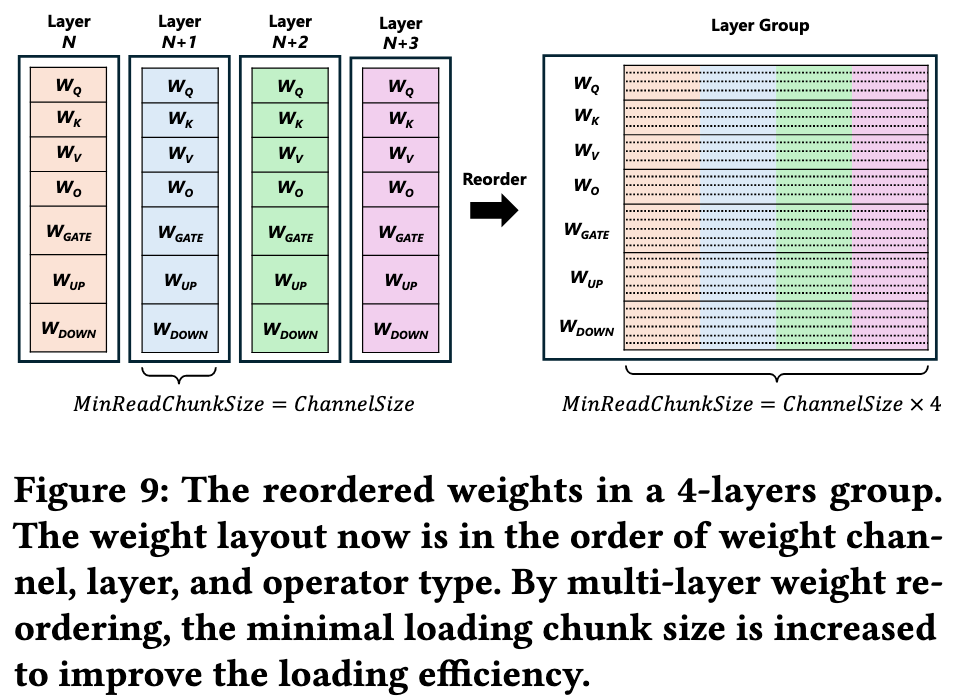
和 LLM in a flash 的观察一样,IO 每次读的块越大,IO 吞吐量越高,所以 ActiveFlow 为了让预加载更高效,它还对存储在闪存中的权重布局进行了重排,将多个层中相同 channel 的权重存储在一起。这样,一次I/O操作就可以读取多个层的同一部分权重,显著增大了数据块大小,从而最大化闪存的读取带宽。
5.2Active Weight Swapping Pipeline#
The pipeline consists of four main operations:
- Computing (C) – Performs the required computations.
- Top-k (T) - Extracts the top-k mask from activations to determine the indices of the activated weight channels.
- On-demand loading (L) – Loads weights for the current layer group.
- Preloading (PL) – Preloads weights for the next layer group.
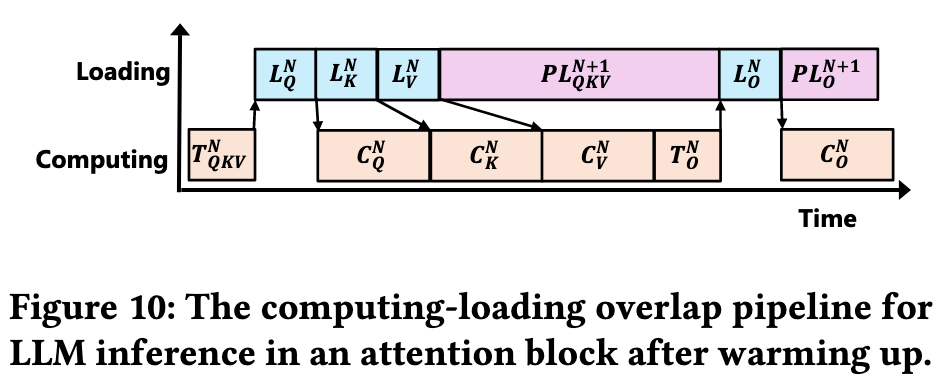
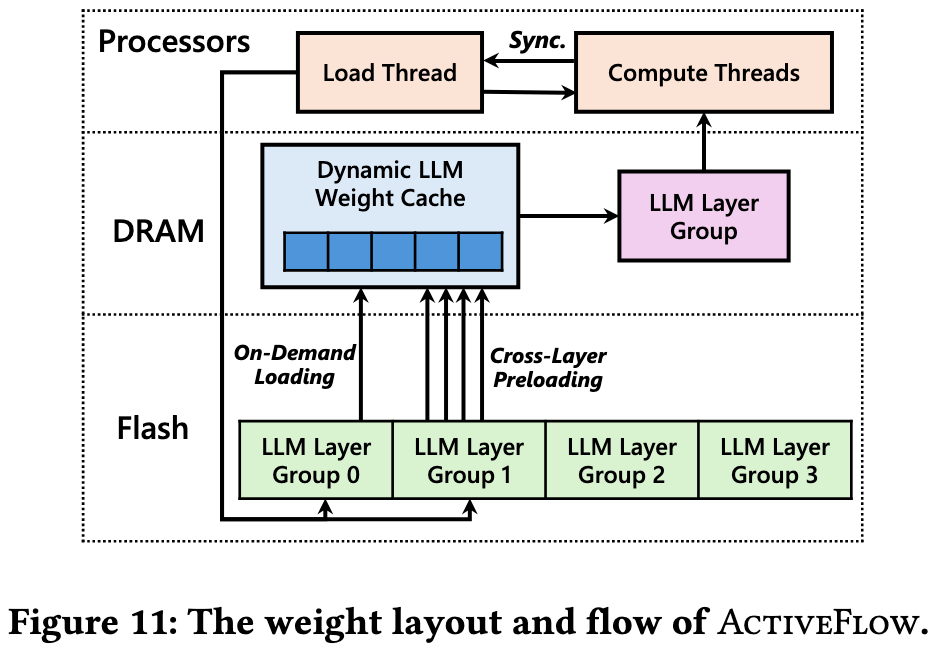
空间上,它将完整的、经过重排的模型权重存放在大容量但慢速的闪存中,只将计算必需的活跃权重和热点权重放在高速但容量有限的DRAM中。
时间上,它通过“跨层预加载”技术,让负责I/O的“加载线程”和负责计算的“计算线程”协同工作,实现了“计算当前层组,同时预加载下一层组”的高效循环,从而最大程度地隐藏了从闪存读取数据所带来的延迟。
4.1 部分的数学建模跳过
ActiveFlow 通过上下文的激活频率设计了缓存
5.3Self-Distillation for Top-K Sparse LLM#
Self-distillation uses the full model’s output distribution as a soft target to preserve essential distributional details and weight correlations.
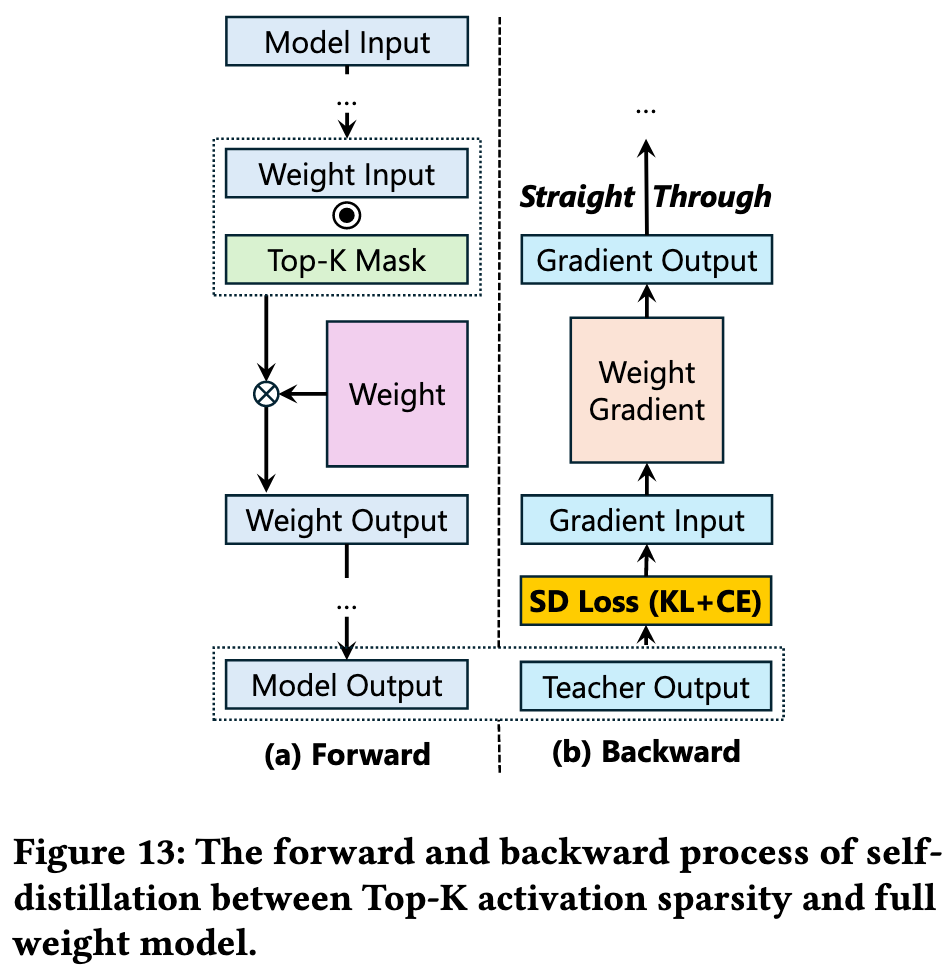
对于反向传播时遇到的挑战,ActiveFlow 使用了两个技术:
梯度直通估计 (Gradient Straight-Through Estimation, STE):为了解决稀疏化导致的大量梯度为零、模型难以训练的问题,该方法在反向传播时绕过了稀疏掩码(mask)的梯度清零效应,确保模型参数能得到有效更新。
组合损失函数: 使用了KL散度(Kullback-Leibler Divergence)和交叉熵(Cross-Entropy)组合的损失函数,以更好地对齐稀疏模型和全量模型的输出。
06Evaluation#
07Thoughts#
7.1When Reading#
这篇文章每张图都画得很好,干净简洁,一看就懂,值得学习!
再温故一下 contextual sparsity 的定义
再温故一下 hot active weights 中 hot 和 active 的含义
contextual sparsity 强调 active: small, input-dependent sets of attention heads and MLP parameters that lead to (approximately) the same output as the full model for an input
- ☐ contextual sparsity 和 power law distribution 强调的不同,以及对应的优化策略方向?
08Related Works#
- ToRead: Training-Free Activation Sparsity in Large Language Models.